1. Building community should be the goal, not large exits

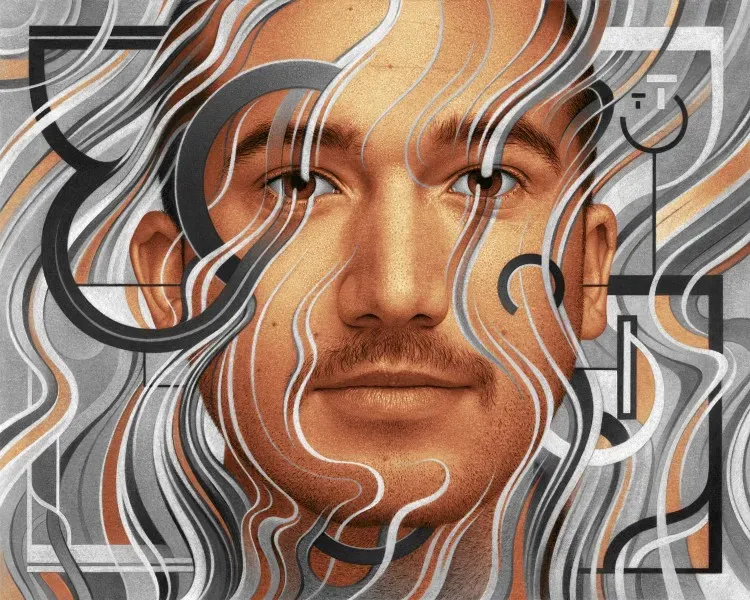
    Leaving Silicon Valley after 3 years, I’ve come to learn something I didn’t know I didn’t know. It’s the reason why people hold living and working in the Bay Area to be so important. It’s the difference between someone sitting alone at their computer and someone making impactful change. The difference is community.

    Community is what builds momentum. Community is the difference between a side project/hobby and a movement. Community is the difference between success and moving on the next idea.

    Community breeds opportunity. When others are invested in your success they are crutches and bridges that create outcomes that you didn’t know were otherwise possible.

    Fledgling communities become movements and eventually institutions. These groups and the mutual support are what drive change, not the unyeilding drive for 10x returns.

    The energy around projects that seem so arbitrary and silly is amazing to see. A tumblr blog and a mailing list morphs into an organization that tours infrastructure otherwise closed to the public. Community turns a DIY project into a globe spanning educational endeavor.

    Community is it’s own reward.

    2 days ago  /  0 notes  / 

  2. Yosemite Is stunningly beautiful. Seeing the park at different times of day really shows you how the personality of a place can change dramatically just by changing the light. You could visit time and time again, and it would appear noticeably different each time. It is a trip well worth the supposed discomforts of camping. Click through to see the rest of the album.

    Yosemite Is stunningly beautiful. Seeing the park at different times of day really shows you how the personality of a place can change dramatically just by changing the light. You could visit time and time again, and it would appear noticeably different each time. It is a trip well worth the supposed discomforts of camping. Click through to see the rest of the album.

    3 weeks ago  /  0 notes  / 

  3. The future is Here. I finally received my Oculus Rift, and It’s amazing. The Rift is the first affordable Virtual Reality headset that has the potential to deliver immersive experiences to the mass consumer market. As large of an impact that smart phones and tablets have had, these devices and their successors are going to dramatically shift the way we interact with computers.  I for one, cannot wait.

    The future is Here. I finally received my Oculus Rift, and It’s amazing. The Rift is the first affordable Virtual Reality headset that has the potential to deliver immersive experiences to the mass consumer market. As large of an impact that smart phones and tablets have had, these devices and their successors are going to dramatically shift the way we interact with computers.  I for one, cannot wait.

    1 month ago  /  1 note  / 

  4. What would happen if there were an anonymous, bitcoin powered Kickstarter?

    Update: It’s real and it’s called HitStarter you can download the codebase or donate to the project at https://github.com/Miserlou/HitStarter.

    Why we need anonymous donations

    Many activities lie in a legal grey area. These activities may be believed to be accepted by a majority of citizens (corporations inclusive), yet may be considered objectionable by a small, well monied minority.

    Residence in this grey area of law created a legal risk that is just too high for many to bear. This risk thus stifles creativity not because it is illegal but because the cost of defending its legitimacy is too high.

    What’s more, this risk prevents supporters from speaking out. Creating an anonymous means of finance would empower not only the creator but those wanting to supper that creator without fear of legal retribution. 

    While legal risk may not be completely mitigated for the originator, it does create a protective shield for their supporters.

    What types of projects might we see

    • International protest organizations
      • Syrian rebels
      • Occupy
      • The Pirate Party
    • Wikileaks
    • Anonymous
    • Drug organizations?
      • Distribution
      • New Submarine
    • Organized Crime?
    • Copywritten works
      • Financing for Escape from Tomorrow
      • Remake Star Wars Episode 1-3, but good
      • Get someone to release the original, silent version of WALL-E
      • Make a movie version of The Silmarillion, something the Tolkein estate has expressed opposition towards)

    Each of these organizations would have to make a case for why someone should donate, and state what they are going to use the funds for.  Of course they could always lie.

    I wonder if these types of uses would be popular, and if so would the project creators dissimulate to try and increase appeal, or would the true mission be popular enough to raise funds?

    I fear that existing power holders would be extremely opposed to this, as it subverts their own plans for controlling political and economic organization across the globe.

    However I have a hope, albeit potentially a naive one, that while the above is true, the ability to raise funds may be a disincentive towards violence.

    A thought experiment

    How does one combat an entrenched political power? If you are poor and have no access to legitimate participation there are few options. Organized protest and violence (often both) are the only ones that come to mind. Would the availability of funding promote peaceful organization? or would it enable these organizations to buy more weapons.

    Thinking about the arab spring, and the violence and regime change that arose, you could make an argument for either outcome.

    Much of the unrest arose directly, or indirectly from dramatic increases in food prices (this has been a historical trend).  Would it have been possible that access to capital in this time could have been used  by the Bahraini to feed themselves, when their government wouldn’t? And if so, would this organization originally created to distribute food overtime become an advocate for the people? And overtime lead towards a less oppressive state? I like to think so, but again I thinkI may be naive. Not only because of all the potential factors in these situations affecting the outcome, but also because I do not think the American or European governments would allow such a tool to exist in the first place.

    What do you think would happen if a crowd funding service using bit coin were to exist? What would the government’s reaction be? What types of projects do you think would bet funded?

    1 month ago  /  0 notes  / 

  5. Pittsburgh bound once more

    Pittsburgh skyline at night.

    After 3 years of living in the bay area, it’s time to head back to Pittsburgh. My time in Palo Alto and San Francisco was extremely formatve. I learned more there than I think any other time in my life. I hope to continue that trend once in Pittsburgh.  Pittsburgh is a great town with a lot of brilliant people, and I’m excited to continue working on my accessibility projects while I’m there. It will be sad to leave San Francisco and all of the great friendships that I’ve made there, but I know we’ll all stay in touch.  I’m not leaving until early May, so let’s make sure to meet up before then. If not, you’ll just have to come and visit.

    2 months ago  /  0 notes  / 

  6. The Speech+ Speaking calculator designed for the blind, on display at the Computer History Museum.  It’s the great grandpa of the calculator I mentioned last week, the speaking TI-84.

    The Speech+ Speaking calculator designed for the blind, on display at the Computer History Museum.  It’s the great grandpa of the calculator I mentioned last week, the speaking TI-84.

    2 months ago  /  0 notes  / 

  7. CSUN 2013 - My First Accessibility Conference

    A view from the vendor expo at CSUN 2013

    I just returned from my trip to the biggest(?) conference on accessibly in the county, CSUN 2013. I owe big thanks to Knowbility and Sharron Rush for making it possible for me to attend. They sponsored my ticket to the conference, and their kindness and eagerness to support my interest in Accessibility is a great example of what I found through out the conference.

    CSUN brings together industry leaders, teachers, parents, start ups, and members of the community representing every disability you can think of: Cognitive and motor impairments, blindness, hearing loss, dyslexia, and more. It’s a full week of workshops, extremely emotional talks, and community  bringing people together from places as far as Qatar and Australia.

    The attendees were an extremely empathetic and innovative group of people dedicating themselves to improving the lives of the too often marginalized. A few examples:

    • Tecla - Founded by 2 young guys in Toronto making an Open Source(!) device to make touch screens accessible to people with limited mobility.
    • Orbit Research - Created an add-on for TI-84 graphing calculators which makes them accessible to the blind. The add-on creates an audio representation of the graphed function, changing frequency depending on the slope of the curve (you really have to hear it).
    • Knowbility AIR - A yearly competition pairing web developers with non-profits in order to increase awareness about accessible web design, as well as providing a much needed service to underfunded non-profits.

    Ingenuity is rampant in this community. They will work ceaselessly to make their lives better: from a father making a device to more easily communicate with his autistic son to a deaf/blind man, making a device to communicate without the need for an interpreter.

    It was a truly remarkable experience, and if I’ve learned anything, the need for start up talent (and capital) outside of the consumer web is enormous. Like those building tools for agriculture, there are innumerable opportunities in industries not driven by display advertising, accessible technology not being the least among them.

    In the end the conference was life changing in the most positive sense. However, there was one aspect of the conference which was not so great, one that I will go into more detail in my next post: the vender expo. 

    PS. The highlight of the conference was all of the service animals. No matter how well trained they were, they always lose it when they meet another dog. (thanks @thebillygregory for pointing this out).

    Next year I’m calling for a Dog meetup so all of service dogs can play together for a little bit.

    2 months ago  /  0 notes  / 

  8. The cost of disruption: accessibility and the decline of travel agents

    One of the biggest benefits of the rise of the internet has been the disruption of those industries which have survived based on the difficulty of accessing information. The quintessential examples of these have been the travel industry with the rise of sites like Expedia and Travelocity as well as real estate market with sites like Redfin

    Software may be eating the world but it’s also having a negative impact on those who depended on these outmoded services.

    The point is not to say that these industries should be protected in order to serve a minority of high need individuals, but simply to increase awareness about the collateral damage of these changes. It is not just the travel agents who were affected, but those people who once could call these agents on the phone and talk. Specifically, it has been the elderly and the blind who are most affected and are now isolated because they cannot access the benefits of the new, more efficient services.

    The innovations that out competed the travel and real estate industries should now focus on making themselves available to those were were left out the first time around. 

    Only 14% of blind users consider themselves proficient at using a screen reader, which is the primary way the blind interact with online services. The decline of human-service based businesses like travel agents has left the blind community worse off than they were before, and making these services screen reader friendly may not be enough, though it’s a good start.

    Having someone  talk to every potential customer is no longer a sustainable business model, but the voice based interactions that we once had are still more comfortable for many than interacting with a business via a keyboard and mouse.  Perhaps the best way to design an inclusive experience serving those left out be the web-based innovations of the last decade is to return to the past. Except this time, instead of telling a person what we need, we’ll be telling the computer.

    3 months ago  /  0 notes  / 

  9. Which torrent websites and clients are most accessible?

    Bit torrent is a service which stands for the freedom of information, but is that information free to everyone? 

    I decided to check out how accessible the the top tormenting websites like the Pirate Bay were. I also tried using three clients for the Mac of which only one was useable.

    The good news -  It is possible to download torrents using a screen reader.

    The bad news - It’s not easy

    Websites

    None of the top 5 websites (as ranked by torrentfreak.com) actively support accessibility. Not one uses ARIA landmarks, section headers are often missing, and tables displaying search results are difficult to navigate.

    Best Bet - No single website outshines the others. Choose the website that has the best selection. Avoid torrentz.eu.

    Clients

    In order to do download a torrent file you need to install a client on your computer. The three most popular options for the Mac are : uTorrentTransmission, and Vuze.  Of these 3 only uTorrent is accessible. The other options do not label any menu items or downloading files (the read as “blank”). Warning: Do not install Vuze. It installs chrome extensions without your permission or knowledge and changes your DNS settings).

    Best Bet - uTorrent.

    For a service that values open access to information so highly, there is a lot of room for improving the accessibility of these products.

    3 months ago  /  0 notes  / 

  10. Fashion, Social Norms, and Wearable Computing.

    Marty McFly wearing television glasses at the dinner table in Back to the Future Part II.

    Google Glass has inspired a lot of talk about how socially acceptable wearable devices are. The Atlantic recently ran an article where 2 people wore them into a bar. Needless to say, the reaction wasn’t positive. Google is of course aware of this and is actively responding, even promoting a fashion show features the device. But is marketing enough?

    Seeing how Bluetooth headsets are still perceived (read douchey), given the best efforts of the companies selling them, the success of Glass does’t seem very rosy  Fun Fact: bluetoothdouchebag.com exists.  Glasshole.com probably isn’t too far behind.

    The fashionability of devices is such a frustrating design challenge. On the one hand you have this device that has uncountable benefits. A device which science fiction writers have foretold for years is about to hit the market, but for some difficult to describe reason, people don’t want it.

    It’s not just the fashionability of the device, but the way you interact with it. yes, bluetooth headsets look kinda funny, but they break long standing social norms around conversation. Unless someone has a hand to their ear, if they are looking at you and talking, they are talking to you. Bluetooth headsets changed that by allowing people to talk on their phones without using their hands. Social awkwardness ensued.

    Makers of wearable computing devices have to keep these constraints in mind when designing not only the product but also the way users interact with that product.  Glass is struggling with the design, but by requiring users to tap on the side of the glasses to issue a voice command, they are at least addressing issues with social norms.

    The ideal to strive for is invisible computing. Those around you should have no idea that you are interacting with a device, either by what you look like or how you behave. Of course, we are far from this being a possibility, but aiming for it should result in making the right design decisions along the way.

    3 months ago  /  0 notes  /